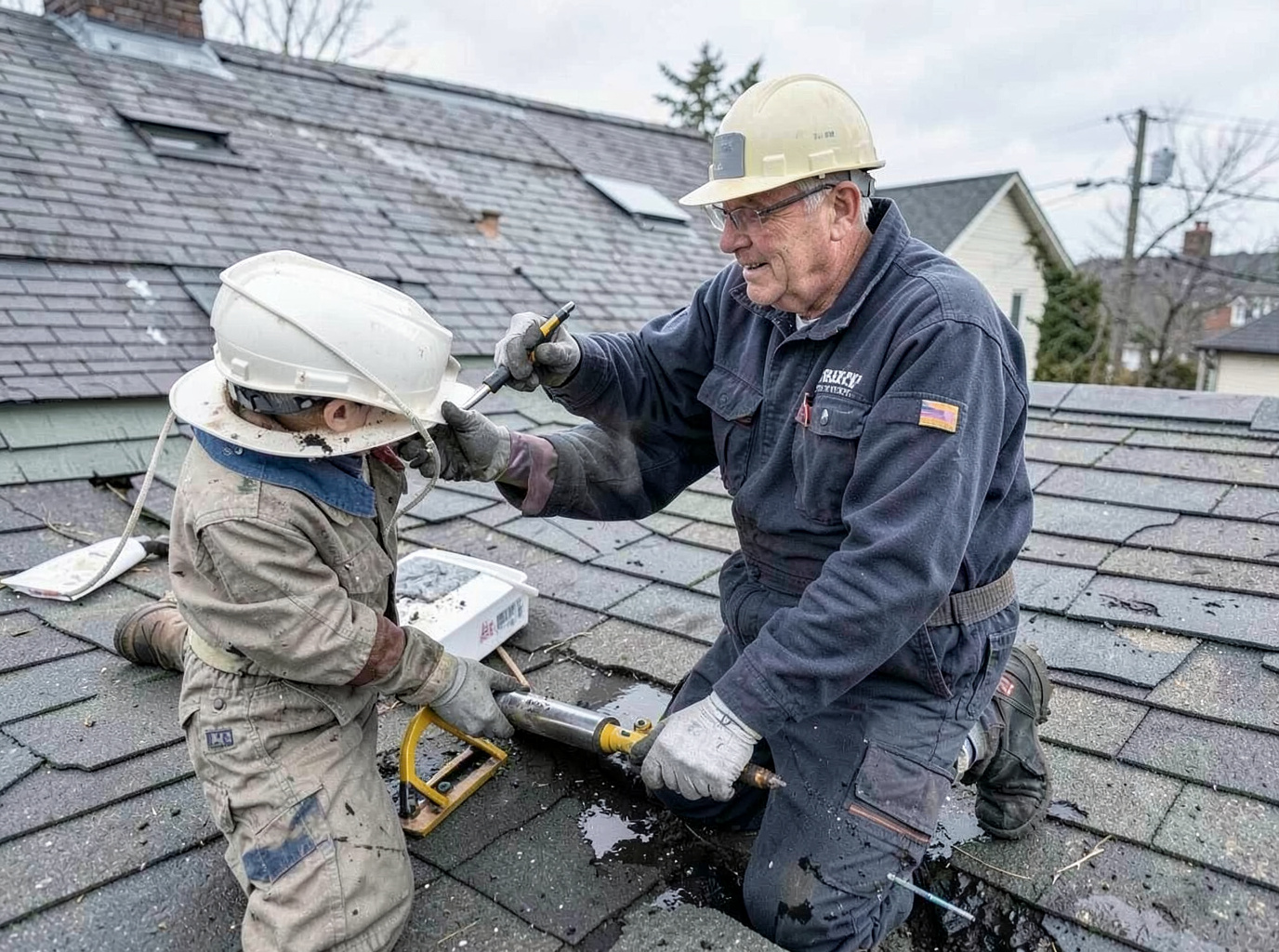
Gary's housing stock, much of it built before 1960 in neighborhoods like Glen Park and Black Oak, features aging asphalt shingles and flat sections prone to hidden leaks around chimneys and vents. Lake-effect snow from Lake Michigan adds repeated freeze-thaw cycles that crack sealants and push water under flashing, especially on west-facing slopes near the Gary Chicago International Airport. A thorough inspection must account for these patterns rather than relying on surface checks alone.
Technicians start with a visual walk of the roof and attic, then use moisture meters and infrared imaging to locate active intrusion points without unnecessary demolition. In areas like Miller Beach and Downtown Gary, wind-driven rain off the lake often enters at poorly maintained step flashing on brick chimneys or around HVAC curbs added during later renovations. Documenting these entry points with photos helps homeowners see exactly where water is traveling before any repair plan is proposed.
Lake County building practices sometimes left older homes with minimal underlayment, so inspectors check for rotted decking and insulation saturation that can lead to mold if left unaddressed. Service calls in nearby cities such as Hammond and East Chicago show the same pattern: leaks that appear only after heavy spring rains following a winter of heavy snow load. This local knowledge prevents misdiagnosis that sends water tracking to the wrong section of the roof.
Inspections conclude with a written report noting immediate concerns versus items that can wait until the next dry season. Homeowners in Brunswick and Westside often request these reports before listing a property, since buyers' inspectors now routinely flag lake-effect damage that was previously overlooked.
Technician insight
In Gary, the thing that catches most people out with Roof Leak Detection & Inspection is how lake-effect snow sits on older homes in Miller Beach and Glen Park, then melts and refreezes under the shingles for weeks before any interior drip appears. Homeowners often assume the leak is new when the real damage started two winters ago in the underlayment.
Hidden Leak After Heavy Snow in Glen Park
A Glen Park homeowner noticed ceiling stains only after a March thaw. The inspection found water had entered at deteriorated flashing around a bathroom vent, traveled along rotted decking, and pooled in the insulation. Infrared confirmed the path; the report outlined targeted flashing replacement and insulation removal to stop further mold growth.
Roof Leak Detection & Inspection Services We Offer
✓Infrared Moisture Mapping
Uses thermal imaging to locate hidden water under shingles and membrane without cutting into the deck, ideal after lake-effect snow events in Miller Beach.
✓Attic Water Intrusion Inspection
Checks insulation, rafters, and ceiling joists for saturation and mold in older Glen Park and Black Oak homes where ventilation is often inadequate.
✓Flashing and Sealant Evaluation
Examines step flashing, vent boots, and chimney collars that fail first under Gary's freeze-thaw cycles and wind-driven rain from Lake Michigan.
✓Gutter and Drainage Assessment
Traces water flow from roof edge to downspouts to identify clogs and improper pitch common on flat sections near the Genesis Convention Center.
✓Drone Roof Survey
Captures high-resolution images of steep or difficult sections on two-story homes in Downtown Gary and Westside without ladder risks.
Roof Leak Detection & Inspection Cost in Gary, IN
| Service | Typical Range | What Affects It |
|---|---|---|
| Basic Visual Inspection | $175–$275 | Single-story homes in Glen Park or Black Oak with easy attic access. |
| Infrared + Moisture Scan | $250–$400 | Includes thermal imaging; price rises with two-story or complex roofs near Miller Beach. |
| Emergency After-Hours Inspection | $350–$500 | Active leaking during or right after heavy lake-effect snow or rain. |
| Pre-Listing Inspection Report | $300–$450 | Full documentation for homes in Downtown Gary or Westside preparing for sale. |
Ranges are typical for Gary, IN and confirmed with an exact written quote before any work starts.
How it works
- 1
Schedule and Site Walk
Homeowner provides address and leak history; technician arrives and walks the roof and attic to note visible damage and access points.
- 2
Moisture and Thermal Scan
Infrared camera and moisture meter are used to trace active leaks, focusing on known problem areas created by lake-effect snow and older underlayment.
- 3
Photo Documentation and Report
Findings are photographed and compiled into a clear report that lists each leak source, affected materials, and recommended next steps.
- 4
Review and Next Steps
Technician explains results on site and provides options for targeted repairs versus full replacement based on the home's age and condition.
Pricing
Most roof leak detection and inspection calls in Gary fall between $175 and $450 depending on roof size and access difficulty.